Tuesday, 26 April 2022

Eason Genealogy One Name Study update

Alternative title: What I did in the holidays

I started this journey a few years ago when I found a lot of Eason families (my maiden name) here in New Zealand that were not related to my family - I wrote a blog on this a while ago. It made me wonder about linking them together and I started looking at a range of Eason families. This eventually led me to register a One Name Study with the Guild. 

What I like about this study is that I can do it in whatever way I like and take as long as I like - and get sidetracked! I have put a few trees up on my website but am now thinking I might add a large number of the trees I have compiled, even though many of them are certainly not complete. I have a Facebook page where I have been putting the odd bit of research, but with over 13,000 people in my database I think I should probably start putting some of it online. I know there are a number of trees out there on Family Search, Wikitree and My Heritage as well as Ancestry that I have covered, but I always do my own research  before even looking at those (if I even do) and  I like to make sure everything is documented the best I can. In saying that, I make mistakes, jump to conclusions, and sometimes make some interesting connections that are not always correct, but I have notes in my files saying why I made them and that I'm not sure of them. Because of this I have been hesitant to put things on my site, but am thinking I will just out a disclaimer and hope that some of the Eason lines out there will get in touch and I can send all my notes and they can correct me - with evidence of course.

In the course of my One Name Study I come across all sorts of interesting versions of the Eason name - Esson, Essen, Easom, Easton, Eson and many more. This can make things a bit difficult when tracing people and some families use all versions of the name for different people depending on what parish they move to and who the bishop was.

I get sidetracked frequently and when I first started my study I decided I would do a county at a time starting in England. I started with Kent, as that is where my family are from an I made trees of as many of the families that I could and tried to connect them all. This worked quite well for a bit and I did a few counties this way. Then I found many families moving to the United States and Australia and I kept getting dragged to a different place, so I decided to change tack.

I had downloaded all of the England, Scotland and Wales census records for the name Eason and I had started with the 1841 census a while ago, see who I had in my trees already and adding new ones. These school holidays I set myself a goal, to finish the 1841 census for every Eason. This meant doing the whole tree for each family as far as I could go - not just putting in that one family. It's done. I have added a large number of trees and connected a few that I had before - I'm itching to get onto the 1851 census now.

It was a difficult journey and I found a large number of transcription errors (always look at the originals, do not go by the transcriptions, you'll be amazed at what is written sometimes). There were also the issues of being called Eason in the 1841 census but when I followed the family and found births and later census documents that they were not Eason, but another version of the name. My personal rule for this is if they are known as another version more frequently, then I stop researching them - it has to be a whole family using an alternative name. Some families have one child who uses Eason and another that uses Easton, that keeps me on my toes.

I also stop following a female once she is no longer an Eason (or I would be doing some trees for a very long time). I will find her death but I don't put in her children and husband's details. There will be a few extras in my files, as I do add all the people on a census, or if they are listed on another document that is pertinent to the Eason name but I don't go looking for them specifically.

The numbers:

So in the 1841 census there were 781 instances of the Eason name. Of those 520 are now in my database with their trees fairly complete as far as I can go for now. 108 I found were not Eason once I followed their lines far enough and there are 90 that I have no idea where they belong at this stage.

Part of the reason of having no idea is the common names. Here are the main ones in this 1841 census and how many occurrences there are - I'll be interested to see what it looks like for 1851 and so on.

Mary - 71 (and another 11 Mary Ann)

John - 58

William - 57

Elizabeth - 46 (and another 14 Eliza, of which some are Elizabeth)

Sarah - 43

Ann/Anne - 41

So  over 350 are only 8 names and many with the same birth date.

The 1841 census is probably the most vague of all of them, so I am hoping the future ones will be a little easier to get checked. The birthplace was only listed as a yes or no to being of that parish so it was difficult to sort people when it says no - they could come from anywhere. The other thing in the 1841 census is that they rounded the birth dates to the closest 5 if people were over 15, so a 23yr old would be down as being 25 and a 27yr old would also be down as being 25. Makes for some interesting sorting. People also lied about their age - you can't take anything too seriously with any census - lots of extra data is required to prove something is correct.

On to the 1851 census - I'm looking forward to having more information to play with and perhaps some of those trees I put together will clear up some of my unknowns from 1841. Maybe I should get some gardening done first....


Saturday, 28 August 2021

Isolation Take 2 week 2

We got the news yesterday that we are still in Level 4 until Tuesday night, and then hopefully some of the country (including us) will move down to Level 3. It's a funny feeling again. I think there was always some hope that we would move to Level 3 quickly, but it's sensible not to. Auckland (and possibly Northland) will be in lockdown for a while so it is particularly difficult for them right now. We are definitely lucky being in the South Island.

I'm watching the Facebook posts of my relatives in the UK travelling around and doing the 'normal' day to day things and thinking that was the other way around a while ago, with us in Level 1 and them in lockdown. Things can change so quickly, especially with this Delta variant.

When lockdown comes there are always a range of posts that pop up on social media that make you laugh, or that are particularly good. A couple that I really like at the moment are the One Day More Corona Parody (thanks to JJ for sending this to me) and the Aranui Community Trust's TikTok that reminds people how to stay safe - love the reo and the energy in this, it's fun but gets the message across.

This week has been busy - contacting students I work with, getting long needed paperwork done and having Zoom calls and Google Meets. I do find the calls difficult sometimes when the video and audio don't match, I realise how much I lip read in these situations and wonder how it must be for those that are hard of hearing and have no hearing aids to help.

NCEA exams have moved back 2 weeks. This will give students more time to prepare, but will also place more pressure on staff as they lose time that would normally be used for planning for the next year. It's a fine balancing act and I hope that schools consider the well-being of staff as well as the well-being of students. 

I am watching the paralympics at the moment. What amazing athletes. They have overcome so much and are competing at such a high level. I have learnt a lot about the classification system - this site helped immensely and I am continually referring back to it as I watch new events. It's so sad that the Paralympics don't get as much publicity as the Olympics, but I guess that is the way with many sports - someone makes a decision as to what gets airtime or pages in the news.

The good weather meant I could get out in the garden and the longer daylight hours have been great. I'm loving the spring flowers and the blossom on the fruit trees, The rain now means that I get more genealogy done and I am working on my mother's Sagar line at the moment which has been really interesting. Lots of Barons and property, very interesting history. The photo here is of my gg grandfather's Ironmongers shop - it has been recreated in the Abbey House Museum in Kirkstall which is where the Sagar family held a lot of land. I remember my mother saying the shop was exactly how she remembered it, right down to the smell and the bench she used to sit on. I'm loving the research and the gardening.  It's a win win for any weather for me at the moment.

How do I feel this week? I was feeling ok for a while, then had a wave of OMG how am I going to manage this, then after chatting with a couple of people I felt better again. Just shows how important it is to stay connected to others during these uncertain times. Make sure you reach out and have some good conversations each day. He waka eke noa - we are all in this together.


Friday, 20 August 2021

Isolation Take 2

 So, here we are again.

We found out on Tuesday afternoon that we had one Covid case in Auckland. By midnight the whole country was in lockdown. Today we find out we are in this for a while longer - at least until the middle of next week. 

It was strange day on Tuesday. I had no idea anything had happened and I went after school to buy some cat food and the carpark at the supermarket was full! It's never full. There were so many people there, I figured at that point that something must be happening, especially when I saw a lady come out with a trolley that had a lot of toilet paper! I was surprised how few people were scanning in, knowing this was probably Covid related, but I scanned (as I always do), dashed in to get the cat food I desperately needed and then came home. To stay for quite a while as it turns out.

I don't know how I feel. Part of me is happy to have the time to get all that paperwork done for school. I quite enjoy the extra time I have to potter in the garden, have lunch at home and pat the cats, lots. I enjoy being in the quiet and having the freedom to have lunch when I want and to pop out in the garden for 30 mins when it's warm.

But I also feel strange. It's just not comfortable and I worry for so many people on so many different levels. Much of this I went through during the isolation we had last year (you can read all my blogs on that) but I feel like I'm doing all that thinking in a much shorter space of time. Back then it was all new, we were finding our way through. It took days to work out what was going on and how to manage things. This time it's all been a bit of a rush. Here we are. Bang. Back into it. I'm not sure how I feel about it.

I have ways to spend my time. I'm working from home and have spent the last few work days getting some much needed paperwork sorted as well as planning for a continued lockdown. I've spent many hours on my laptop, sadly missing a programme I'd like to have to make life easier, but my work laptop is behind closed gates so I have to do without. I can still work though, as most things I do are online and I keep everything in my Google Drive. I have a website to make, some scanning to do, lots of sorting out of documents, gardening, genealogy - I can fill my time up quite happily. I even have a jigsaw here but I don't feel like doing one. Maybe it's the fact that the cat pulled the last one off the desk before it was complete (grrr), or maybe I've done enough lately.

We are lucky to have the technology we do - video chats, messaging, funny pics coming through to keep us entertained, but it's also a reminder that not everyone has that access. I think that's part of my battle. A lockdown is not equitable. Hmmm, more thinking on that.

Don't get me wrong, it is definitely the right thing to do. It just feels strange this time around for some reason and I haven't quite pinpointed it yet.

Friday, 23 July 2021

Education - where are we going and why?

 Over the last few weeks there have been a number of articles and books that have come my way about education in general and where we are heading. It's something I have been in the midst of for a long time, looking at change and how the system is working, or not. I feel very strongly about this and every time a new article comes my way I read it and am sitting here going yes, yes, but how can we get others to do the same thing?

I think we would all agree that the current system of education does not fit everyone, there will never be a one size fits all, but the question is, when are we going to change what we are doing so we cater for more of our young people. I wrote a blog about this in 2018 - nothing seems to have changed in that time and I wonder when, or if, anything will. There seem to be a bunch of people keen to move forward, but then a group definitely keen to stay put, or even go backwards! One of the podcasts I listened to this week even comments on the way the NCEA changes that are currently in progress are actually taking us back a step. This podcast is a conversation with Bevan Holloway, the founder of SMATA, ex HOD of English at Wellington Girls College. This podcast talks about the concept of 'play' in a secondary school and the experiences that schools can offer that challenge what many would consider traditional secondary school. Well worth a listen. It reminded me of my blog around the Lifelong Kindergarten - play being an important part of learning at any age.

I think that the education system that has been around in the same format for a very long time has not kept up with what students or the current employment system needs. There is a great blog by Robin Sutton published this week about this very thing - I love the title:

Our educational purpose: compliant economic units, or creative human beings?

He says "There was a general view that education didn’t meet the needs of the group of young people who are most at risk." I believe we have known this for a while but not all schools are trying to do anything radical about it and when they do, they are often slammed for being too radical, or not focusing on the qualifications at the end.

Derek Wenmoth's Futuremakers blog Pedagogy of Compliance talks about our actual system of schooling and Frederick Taylor's pedagogy vs John Dewey. It gives a good background of how we got to where we are but also challenges us to move forward and make change, to take risks and to move forward. Derek is always writing about the future and what we could be doing and his Futuremakers site has more to read on this very topic. I look forward to his blogs -  I read them and say yes, yes, yes....

As the world is slowly moving on from Covid19 there have been many articles around changing the education system to better cater for needs of students. Many young people excelled by working from home - others wanted to be in a school environment. It brings up many questions about what we are wanting to achieve and how students learn. Time to revolutionize our education system is an article around schooling in Massachusetts but is relevant to us in New Zealand as well. It challenges educators to:

 "create the conditions necessary to meet students where they are, and move toward student-centered, whole-learner approaches that are trauma-informed and more responsive to individual students’ needs."

So, where to from here?

The system needs to change. This will not happen overnight, but we can make it happen, one small step at a time. Keep pushing those boundaries, keep challenging each other, keep sharing information and ideas so we can move forward.


Sunday, 18 July 2021

Genealogy


I love the school holidays. Apart from having a break from a busy time at work, it gives me the opportunity to get stuck into some genealogy - I mean hours and hours of it! I can quite easily spend 8-10 hours a day just researching and sorting and puzzling through things. My poor garden does get a bit neglected and I find myself hoping for rain so I don't feel too guilty!

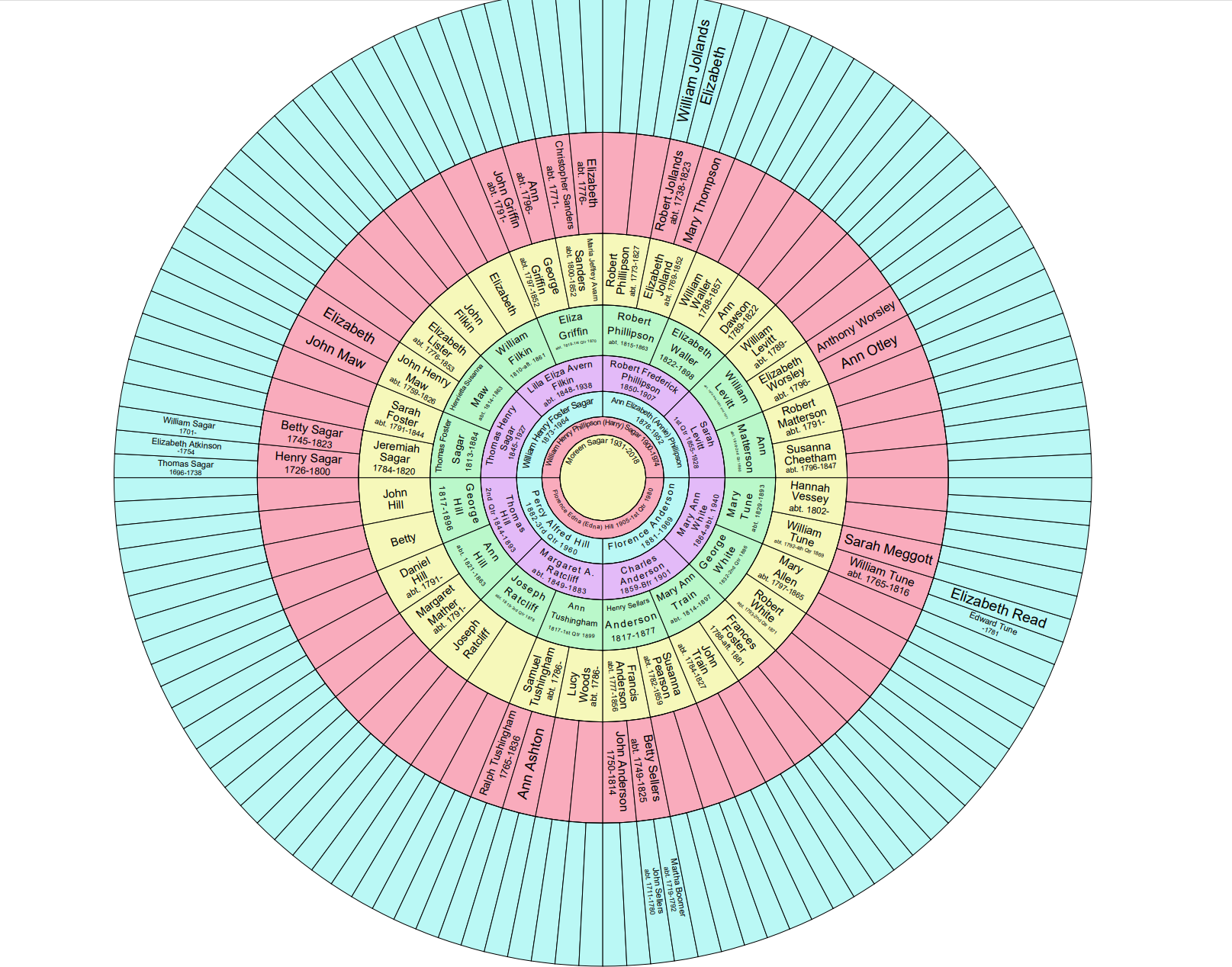
These holidays gave me the chance to tidy up some lines with the main purpose being able to try and track some DNA matches. You get matches with all sorts of people and often I find that we can't work out who that common ancestor is. So my goal was to set up something that meant that others could see where they might fit on my tree and hopefully be able to connect a few dots.

This fan chart started last year when I decided to do something for my children for Christmas. I did both my tree and the McLachlan tree, giving them a fairly full idea of their ancestry on both sides of the family. Both had gaps with dates not complete, or names missing, so I decided to work on filling in some of these on my line. Although there are still a few gaps and a couple of "I'm fairly sure" guesses, it is looking a lot more complete than the one I did last year. 

This is a printout from MyHeritage. I don't put my tree online generally, but found this was a really good way to present this information so I've put the basics up there, enough just to print this out. The limitations are that you can only have 250 people in your tree for free, I'm sitting on 241 with the Eason and McLachlan trees, so I won't be putting much more up there - maybe a few gap fillers if I find them. I do like the way it looks - it's very clean.


After doing the fan chart, I thought I'd see what the next generation looks like. As I couldn't do this in MyHeritage due to numbers, I used Charting Companion. I've used this a lot in the past for full circles of lines and did a number of descendant circles for the McLachlan Reunion in 2013.

I did a circle for each of the lines that came out to New Zealand and did them in different colours, but hadn't done an ancestor one until today.

The difficulty is that I have my Sagar and Eason lines in different files. I decided not to join them together early on in my research and they have stayed apart. It's something I'll have a think about - it would be useful when putting pretty things together but when I'm researching, the files get very large. The Eason one in particular, because I'm doing a One Name Study, it has Eason's from all over the world. Having my Sagar line in there could get a little confusing I think.

Anyway, I did the Eason and Sagar lines to see what they looked like - taking them out the 8 generations back. They are not pretty yet, but I just wanted to see what was missing and this certainly gives me a really good view.

I'm missing a fair bit, not the Eason name itself, as I know I have more even further back, but many of the others need filling in.

The question is always - how far do you go? These are my great great great (x lots) grandparents, but often in lines that we don't always think of. Most of us research our name (generally paternal line) or our maternal line, but then once again following the paternal grandfather. It's interesting to follow different lines back and often see where some of those obscure middle names have come from!


So, both the Sagar and Eason lines have now spread into Metcalfe, Gildon, Holmes, Anderson, Hill and Phillipson lines and it only gets bigger from there!

In working my way back I am finding all sorts of interesting things, some unusual middle names (I finally found where the Avern came from in my GG Grandmother's name) and some interesting forenames - Mr Brown White is definitely one for the books!

So, next step is to fill in the next generation all round I think. It would be good to get a few more filled out - I won't be going back down every line, but it would be nice to have as many of my 5 x great grandparents names.

Part of me hopes it will rain all next week.....

Tuesday, 12 January 2021

Books - Executive Function "Dysfunction" - Strategies for educators and parents

Another book in my holiday reading list, another one from the Dunedin University Bookshop. This book by Rebecca A. Moyes gives a good insight into executive function, what it is, some strategies to help educators and parents, and she uses real examples to explain difficulties that can arise when it is dysfunctional. Executive function is about the neuropsychological processes that impact self regulation. We see it often in students who have a lack of time management skills, lack of attention, or behavioural difficulties. These are my notes, with a few more links to go deeper into topics.

Behavioural Inhibition

This is where students don't seem to be aware of social laws that govern behaviour. Examples could be of inappropriate conversations, or sharing of information. Extreme examples are those with Tourette's Syndrome who are not able to control voicing out loud what they are  thinking. Those with Alzheimers can also make inappropriate comments due to deterioration of executive function. It's important to work out if behaviour at school is because of noncompliance or if it is because they are not competent in this area. If it's about competency, then they need to be taught self management skills rather than be disciplined. This book gives lots of examples of what this can look like and offers lesson plans for teaching students to refrain from using negative words and perseverative talk (always on a certain topic eg trains).

Those with a large executive function deficit appear to be ones that struggle with change in routine, Children with ASD often struggle and can use visual supports for transitions to help with this. Some children also experience 'rule-governed' behaviour, perseverating on the rules (a lesson plan to help this is included). Sometimes what could be seen to be extreme inflexibility and stubbornness could be a sign of executive function disorder. The Stroop test (words saying colours in different colours) can be highly effective in identifying deficits, as can the Wisconsin Card Sorting test.

Theory of Mind

This is the ability to understand other's beliefs and how they are different to yourself. It's being able to understand how someone else feels and why. This chapter includes a lesson plan to help teach theory of mind through emotions pictures.

Working Memory

4 types of memory are described:

Sensory memory - brief, lasts a few seconds - eg my lips are dry, I need a drink

Immediate memory - 30 sec to a few minutes - eg instruction at school to use T for true and F for false - need immediate memory to recall this.

Rehearsal memory - up to 4 hours - eg repeating statements or actions so you can access it later

Long short term memory - 1 hour to 2 days - Can increase this by the use of mnemonics eg EGBDF for note naming. This is a step into long term memory.

Students forget 90% of what is earned in class within 30 days and most of it within the first few hours of a class. To improve memory recall you need to repeat important things less than 30 seconds after you say them, again within the hour, then review over time. To help support this you can use songs, chants, visual and tactile experiences. This chapter gives a good list of how to help support students with working memory deficits.

Organisational skills, time management, planning, and decision making

Most of this is self explanatory, talking a lot about graphic organisers. I have seen this Freeology site before but it is mentioned here as well and reminded me of it, so many great free resources. One comment really resonated with me:

"Educators must adapt work so that it is appropriate for the students. Otherwise, problem behaviours and anxiety levels will most likely escalate."

Initiation and Motivation

Sometimes what can seem like a lack of motivation is a lack of the ability to initiate which is part of executive function deficit. Students may need reinforcers or a list of steps. Motivation is also an executive function but it's about being able to actually do the task. There is a discussion about intrinsic and extrinsic motivation including some needing rewards or reinforcers to get work done. Many think it isn't fair that some get rewards and some don't, but some children need these to succeed, it's about what the reward is, and for come it could be a perseveration as a reward.

Self talk and emotional supports

This chapter unpacks stress and the effect it has as well as about having good coping mechanisms. There is a stress detective worksheet to identify what activities cause stress and a stress meter to help identify levels of stress. A useful chapter with lots of ideas and worksheets.

Attention

This chapter unpacks a lot about how there are different types of attention issues. Many are unpacked more on this Misunderstood Minds website which is one theory about how we pay attention. This  chapter gives some good strategies on how to help improve attention, including food and water, reinforcers and technology.

I did enjoy this book. It has a lot of examples and good practical ideas. It is reasonably short which helps when you are reading heaps and I found it easy to read. On the way through, doing more research, I found this great site called Understood - lots of info on here about all sorts of things, I'll spend some time having a look through. Meanwhile, for now, I'll finish my blog with the same anonymous quote that she uses in the book:

"If they can't learn the way we teach, maybe we should teach the way they learn."


Monday, 11 January 2021

Books - Autism Spectrum Disorder in Aotearoa New Zealand: Promising practices and interesting issues

The holidays give me time to read some books, some for pleasure and some for work. Over the last week or so I have been reading Autism Spectrum Disorder in Aotearoa New Zealand: Promising practices and interesting issues edited by Jill Bevan-Brown and Vijaya Dharan. This book caught my attention before Christmas while looking through the University Bookshop in Dunedin with my friend Tara. She and I found a wide range of educational books there and we may or may not have purchased a large number of them - woops.... So I thought as I read them I would give a bit of a summary which may inspire a few others to read them as well. 

I really liked that this book is based on New Zealand practice. It shows practices of NZ kaiako and educational professionals who use Evidence-based practice (EVP) and implement interventions for those with Autism Spectrum Disorder (ASD) in the classroom. Overall the book has some great interventions and tips for dealing with the 1 in a 100 students who are diagnosed with ASD. It also has a lot of tips specifically for Māori students and talks about components of culturally responsive evidence based practice, referencing Sonja Macfarlane's work. There are also some great links throughout the book to websites that can be used for more in depth research. I have done a quick note about each chapter to give an idea of what information is available in this really practical book and added a few links for more information about each topic.

Part 1 - Interventions

Chapter 1 - Using an adapted SCERTS framework with a 4-year-old - Anna Christie

SCERTS stands for Social Communication, Emotional Regulation, Transactional Supports. This chapter has descriptions and case studies about how it can be used in the classroom, building competency in each of the three areas by using strengths and interests.

Chapter 2 - Picturing the future: A video modelling package - Tracy Watkin

This is based around Albert Bandura's Social Cognitive Learning Theory which is about behaviour acquisition through imitation. The idea is that an individual learns a behaviour by watching a video of a demonstration of that behaviour. It also talks about Vygotsky's Zone of Proximal Development which talks about a "more knowledgeable other".

Chapter 3 - The development of a Makaton resource for Samoan children - Heather Polson

Makaton is a signing system for hearing but can also be used for communication and learning differences. It uses sign and speech together as a bridge to verbal communication. This supports the idea that the preferred learning option for many individuals with ASD is visual rather than verbal.

Chapter 4 - Social Scripts: SpongeBob helps Sam - Tangi Jackson-Ross

There are lots of different social narratives - statements, comments and questions individuals can use in social situations they find difficult. This one is focussed around SpongeBob Squarepants where the author wrote scripts with illustrations for a child to help them with having a conversation or to deal with different situations.

Chapter 5 - Colourful semantics: An approach for teaching literacy and communication to children with ASD - Dervla Hayes

This chapter was about using colour coding to show the structure of a sentence. It is a possible intervention to show how language works, but not necessarily for Māori due to the sentence structure being different. This is based on the Colourful Semantics approach by Alison Bryan.

Chapter 6 - TEACCH in a New Zealand regular classroom setting - Sharon Ketter

TEACCH stands for Treatment and Education of Autistic and related Communication-handicapped Children. It is a strengths based approach based on structured teaching. This chapter gives examples in writing and mathematics, using the individual's strengths to teach them to work independently in the classroom. It is highly individualised and is based on the premise that:

If an individual with an autism spectrum disorder is not learning a skill or behaviour that we seek to develop, then we are not learning from them and we are not modifying our instructional tactics to their needs effectively. (Powers et al., 2011, p. 86)

Chapter 7 - Creating a social skills toolkit - Fran Dawson

This includes a Functional Behaviour Assessment, musically and electronically adapted Social Stories, video modelling. An example is of a group making a song and video about keeping their hands to themselves.

Chapter 8 - Pivotal response training for individuals with ASD - June Chiaroni

This was about enabling ASD students to respond to naturally occurring learning opportunities and build on their own interests. Parental involvement was very important. Lots of choices were available to students. For examples in literacy they had a choice of seat, a choice of pencil, marker or ballpoint, a choice of writing in a book, on coloured paper or on a computer. A lot of this is drawn from an Autism Internet Module on pivitol response training (which I suggest anyone with an interest in ASD signs up to and does some courses - free).

Chapter 9 - The Ziggurat Model in planning interventions for students with ASD - Jenny Tippett

This model has 5 heirachical levels that all need to be  addressed for intervention. Sensory and biological, reinforcement, structure and visual/tactile supports, task demands and skills to learn. These are all unpacked in this chapter and a case study example is given.

Part 2 - Issues

Chapter 10 - The role of culture - Jill Bevan-Brown and Alexandrina Moldovanu

This chapter is about how culture has influence on how ASD is viewed. In some cultures the symptoms of ASD may be ignored or not noticed as they are considered 'normal' behaviours or may be seen just as a  'naughty child'. There is also discussion about how interventions developed in the Western world are not always appropriate in other cultures. A very strong message that it is important to listen to and be guided by parents.  Bevan-Brown's three-step stairway to cross cultural competence is also mentioned. This is about understanding one’s own culture first, about the influence of the Pākehā culture on the New Zealand education system second, and third, about recognising the necessity to increase our own knowledge of the cultural background of the students.

Chapter 11 - Narrative assessments: Inclusive educational 'selfies' - Natalie Paltridge

Narrative assessments or learning stories can be used to show progressions, depth or ideas for next learning steps. They are used widely in Early Childhood, but not always at other levels. A good discussion in the chapter about how we perceive, apply and use assessment. I do like this quote:

Assessing everyone in the same way will not meet the needs of all students.

A reminder that is assessments are to be meaningful, they need to be student-centered and responsive to each student's learning needs. 

Chapter 12 - Dual diagnosis of deafness and ASD - Sharyn Gousmett

This chapter discusses the challenges and implications of this diagnosis. 12% of children with a hearing loss have some form of disability and a further 12% are thought to have an unconfirmed disability. One thing that jumped out at me was not having a diagnosis until later in life meant that students  "missed out on vital opportunities for intervention support". Early intervention needs to happen at age 2 or 3 and it can make a big difference.

Chapter 13 - Sensory therapies and interventions for individuals with ASD - Julianne Swanepol

A few approaches are described in this chapter. A sensory diet, where there are scheduled activities that can be integrated into a day. The ALERT programme which helps to recognise what those with ASD need to do the help themselves adjust to different situations. Handle Therapy, by Judith Bluestone, which is current not available in NZ. The chapter also has information about a Sensory room and how this works. There are a lot of resources at the end of this chapter as well.

Chapter 14 - PATH: Planning alternative tomorrows with hope - Alison Browning

This chapter was about planning transitions from school to the world. Some key issues were discussed. Transition should be over 5 years from age 14 where students would be introduced gradually to community based learning until their final year of school which should be mainly in a community context. 

I really enjoyed reading this book. I learnt a bit more about some different interventions and it reinforced what I already knew. Some things that went through all of these chapters are:

Getting to know your students is most important

Consultation with the person with ASD and their whānau is so important

The need for programmes to be individualised

Interventions are all built on interests

Interventions should be used with ALL children

You need a sound knowledge of ASD characteristics and strategies

More learning - there is always more to learn


Bring on the next book.


Monday, 5 October 2020

Boma Workshop - September

 Our last full day workshop was held at the beginning of the school holidays. The year seems to have gone so quickly and I still have so much to do on my project. My goal for the day was to get another page complete on my website and to get more feedback on what I have been doing.

My project has come out of my passions for all learners being able to be catered for in a classroom, and to help support kaiako to do this. As kaiako we are time poor and often just wish that there was a simple way to get access to information rather than troll through a million websites and read a ton of information, most of which is not relevant. My goal is eventually to turn this project into a VR/AR app that people can use to experience what it is like to be neurodiverse, but also to have overlays to show how things can be changed easily to make a difference. As that was a fairly full on project, I cut back to a website to start with, to get some ideas down and to start on this path. Interestingly enough, my new job (Learning Support Coordinator at Papanui High School) slots right into this project so I will be keen to flesh it out more once I am there. Meanwhile I am giving those of you that read my blog the opportunity to have a look at the work in progress and if you can find  a bit of time, I'd love some feedback

We had a short workshop on the inner critic today. I loved this poem that was read to us at the beginning:

Our Greatest Fear —Marianne Williamson

Our deepest fear is not that we are inadequate.

Our deepest fear is that we are powerful beyond measure.

It is our light not our darkness that most frightens us.

We ask ourselves, who am I to be brilliant, gorgeous,
talented and fabulous?

Actually, who are you not to be?

You are a child of God.

Your playing small does not serve the world.

There's nothing enlightened about shrinking so that other

people won't feel insecure around you.

We were born to make manifest the glory of
God that is within us.

It's not just in some of us; it's in everyone.

And as we let our own light shine,
we unconsciously give other people
permission to do the same.

As we are liberated from our own fear,
Our presence automatically liberates others.

The inner critic in us often stops us from being the best that we can. It also feeds into the imposter syndrome. This is where you feel like you are not qualified enough or not worthy of what you are doing. Many famous people have spoken out about it, including Meryl Streep who said "Why would anyone want to see me again in a movie?" You can read a bit more in this article about how to overcome imposter syndrome

Fear doesn't go away but it can hold us back from what we could do. This safety mechanism is great when we are in danger, but not so good when we are not. We still need to take risks and make change without being guided by this inner critic. 

So what can we do to help conquer this? We can notice and label it first. Know that the little voice is just that, just a voice. Say that "my inner critic says I can't do it" rather than saying you personally say you can't do it. Be compassionate - your inner critic is trying to keep you safe, just say thanks to it but do what you want anyway. Remove the inner critic from the scene. I believe I have boxes, like compartments in my brain, so I would put it in one of those - and shut the lid. We want to be able to tap into our inner mentor - the older, wiser version of the critic and grow into this version. 

We had some good discussion around what our inner critic said to us and what we could achieve if we didn't listen to it. We mustn't let our inner critic hold us back from doing the amazing things we are capable of.

The rest of the day was dedicated to doing work on our projects and getting feedback. We had a group of last years Boma Fellows in during the afternoon as well as some of the Christchurch Airport staff.  I changed quite a lot of things as the day went on and have been working hard this week to get it to a state that I feel I can send out. There are so many other things I want to add eventually but have to keep it simple for now. I did appreciate all of the feedback though and it certainly made me think about how things look and what is really needed. Hopefully with more feedback and time it will just keep getting better and better.

My goals before our next meetup:

Complete the website for feedback (tick)

Re do and refocus my pitch - we have a presentation in November, that's not far away now.

Get feedback (write a feedback form - tick) and adjust my site


Looking forward to the next meeting in a couple of weeks!


Tuesday, 22 September 2020

Feet and change


It's been a time of change in my life over the last few weeks. 

Finally, after 16 months, I have had my foot operation. They had to tighten up a ligament and take a bit of bone out and lift the bottom of my foot up - no small op and it will be a few weeks yet before I am running around! There is a piece of wire sticking out the end of my toe (not a small piece either!) at the moment and it doesn't come out until October. I'll be off work for a while so I have time to get some things done at home. It's a change to be sitting around, it's a change to not have pain in my foot and it's been a change in what I do every day.

I'm about to change my job. After 4 years at Haeata I am moving to Papanui High School to take up the role of Learning Support Coordinator. This is a new role and I am looking forward to finding my place there and working out how I can best support those learners. This starts in Term 4 (October) so I have a bit of time before I get to start but I'm super excited about it! As part of this I am spending some time working on my Boma project as it relates well to this new role. Soon I will be able to share a prototype and work on getting this up and running.

I have been cleaning out my emails and drives, lots of stuff to clear. I didn't realise how much I had accumulated over the years and how much really is just not needed. Hard to get rid of things though, we can now gather so much online, it's not the same as going through books and papers, there is so much more!!! One of my friends came round and we talked about decluttering so I have been trying to do a drawer or a cupboard/shelf each day while I am housebound. It's getting there - slowly.

I've also been cleaning up in the garden. Shuffling around on my bottom, trying to keep my foot out of the dirt, and not being able to reach far across the garden at the moment, but loving the time to just potter and get the weeds out where I can. Am looking forward to being able to stomp around in the shrubs once I am back on my feet!

I wanted to put my old video tapes onto DVD - or at least store them digitally. Problem is - most of the computers lying around this house do not have DVD drives! Finding storage online for all the data is becoming an issue as well - I seem to have a ton of data in every drive I own! It seems that I have multiple copies of things on different drives. Oh to sort more out....

I have been working on my Eason genealogy as well. It's great to have access to online sites through the library but it means lots more to do. I have been updating my FB page a lot and putting more on my website as well. It's something I love doing and has been a good focus over the last few weeks. I just have to make myself do other things first in the day before I let myself do any, otherwise nothing else gets done!

I have been reading a lot. I am lucky to have some great friends who read widely and they have put me onto some great books. As part of that I finally bought some online to read on my Kindle app - a new thing for me as I do prefer to have a paper copy, but with not being able to drive to the library at the moment, paper books are a bit scarce.

The Power of Us - David Price

I joined the DisruptEd Book Club Facebook group recently and this is the book to read at the moment. (the Kindle version is only a couple of dollars on Amazon right now). Reading this book has confirmed my knowledge that I was exceptionally lucky to be part of the first few years at Haeata. We were pushing the boundaries and doing it in a collaborative, supportive environment. I was constantly in a state of flow and was passionate about what we were doing. It seemed chaotic and could look like that from the outside, but the growth and the knowledge we gained was amazing. We really needed a few more years to show how this new model could work - it takes 5-7 years to really implement change. One of the quotes from this book is about a company BrewDog and it really resonated with me "We are a high growth company. This creates amazing opportunities for us and our team members. This also creates a constant state of flux and a healthy dose of chaos. For us, the time to start worrying is when we don't have the chaos, because it will mean our growth has slowed. WE NEED TO EAT CHAOS FOR BREAKFAST." One of the things that attracted me to Haeata in the first place was that Andy (the founding Principal) said at a public meeting "If you don't like change, don't apply" - he knew that there would be constant change, which there certainly was. We collaborated and worked together to continually improve practice. It wasn't perfect and often wasn't pretty, but I do believe we were heading in the right direction. This book has just reinforced my belief that working collaboratively is the way to move forward.

Peptalk magazine

This is a great magazine that is published here in NZ. It has great articles about wellbeing and has a section specifically for teenagers as well. Well worth subscribing too if you have any interested in mental health, or have a teenager in the house.

The Rosie Project by Graeme Simsion

This was Book of the Year in 2014 in Australia and is a moving yet funny book that I would highly recommend. I'm keen now to reed the other two that follow this book - it will be interesting to see if they are as good.

The Tipping Point  by Malcolm Gladwell as well as Blink

I found this really interesting - it talks about a few different concepts that make total sense. The idea of making things stick, making things practical and personal to become memorable is a no brainer. There was a study about Sesame Street and how they made it memorable. The quote I like is "if you want to know what kids aren't learning, all you have to do is notice what they aren't watching." Something we should think about as teachers. There is also the rule of 150 - keeping groups below this number makes a huge difference. Some really interesting studies done on this. I'm now going to be reading Blink - the power of thinking without thinking. Looking forward to it.

Te Wiki o te Reo Māori

 It was great to be able to drop into Victoria University's mini webinars during the week. I enjoyed the little snippets and have been using some of the phrases each day when I can. I enjoyed the extra te reo on TV - having subtitles was great, the more we see and hear Te Reo Māori the better. I do wonder why we don't do this all the time - it should be more than just a week to highlight what we all should be doing every day.

So that's me for the moment, lots of changes and lots of learning. Loving it.

Wednesday, 8 July 2020

Boma Accelerator Day 2

Up early for a walk around Lake Tekapo - beautiful day and nice to go to the Church of the Good Shepherd and the Sheepdog Memorial without anyone else there. The joy of getting up early.
Our first job this morning was to do our timetable for the next 2 days. We started by working out what we wanted completed by the end of the two days, then worked backwards form there to put specific things on the list.

Mine:
Tues am
Update the Canvas and planning docs on our Boma drive
Show Kit what I have so far - test and iterate and test....
Work on my website so I can get a bit more of the MVP done especially the front page
Tuesday lunch
Finish the first website page
Do another test and iterate
Work on my pitch for this afternoon
Tues pm
Practice pitch
Write blog and process talks from today

Wed am
Complete 2 blogs
refine my pitch
Continue with site after more iteration

Wed lunch
Have a pitch done and rehearsed
Have a website 2 pages OK ish - iterate 2 or 3 times
Have 2 blogs up
Show to some of the others here to get feedback

We had to put a smiley face on for any 5 min job - I didn't really have any but others were then instructed to do the 5 min job now.

I got feedback from a range of people today which helped immensely. It was good to keep going back and getting more ideas.
 - need to add a good description, there is an assumption that people already know why they are here
 - add testimonials from people to add weight
 - make it clear, easy and fast to access
Put on someone's hat - Customer personas - 10 step framework - really great way of thinking about what we need to look at when making our products. We were given a couple of options and I am certainly going to use this to check what I am doing. Need to go through each of these to check what I need to think about.

Melissa Clark-Reynolds

@HoneyBeeGeek
We had a Zoom call with Melissa today. She had some amazing insights into the business world and talked us through her time with developing Minimonos which was a virtual reality world for kids.
Virtual worlds were really popular in the 2000s. Other generations had a real world, they could bus places, people knew each other, they had a lot of freedom. The new world is a lot smaller, they are not allowed to do so much. Parents track their children using phones and the world is seen as a dangerous place. They wanted to let kids know they could make a difference and wanted to give them somewhere they could build a habitat.
During the time when Minimonos were very popular they learnt about brand extension. They learnt to release on a Friday, they looked at where to next and there were a few choices - TV, Browser, Publications, Touch (tablet), Ethical merchandise, Toys and collectibles. They did cards on recyclable paper but found it hard to get into the ethical toys. Most kids liked to party - online they could find friends and community. Most wanted that social connection, a lot were really lonely but in the online world they had best friends. There were a wide range of ethnicities so they had 24hr activity. If kids turned up and no one was there they would leave and come back later. They had virtual costumes - dress up without the waste. Halloween is one of the larges causes of waste to landfill.
At Xmas 2012 the toy industry went into decline due to the introduction of iPad mini and kindle. Children stopped watching TV internationally and the TV ads were the best for Minimonos. Flash didn't work on a browser and they were on the tech list not the toy list. in Jan 2013 Nickolodeon was down 30% and they had lost their path to market and to the platform. Moshi Monsters, Club Penguin, Minimonos all were dropped at this time and Minecraft grew so much. They tried to pivot but were not fast enough.
Question is - when to pivot or when to quit?
Angry Birds made 51 losing games before they made Angry Birds, if they hadn't made that they would be over.
Lessons learnt:
Is the business model right? - they were right but not fast enough, the pricing was right but not sustainable. Now many do through sponsorship
Has the market shifted?
Has the tech moved? If it's not fit for a new shift, how do you do it?
Can the product get out?
Is there better use of capital and time?
Have you got the dream team?
Unfair advantage - they didn't have anything special, now they would probably have hired psychologists and use celebrities. Need an advantage
They closed in 2013 - there was a change.org campaign to reopen.
"Winners quit fast, quit often, and quit without guilt." Seth Godin 
At least you built something people will give a shit about.
"You can't learn less" If you commit to learning the lessons, that knowledge will never leave you. Need to understand business models from the get go.
Many online game companies closed over 2013-2017 - some were funded through sake of merchandise, but all plastic stuff. Filling the world with plastic is not going to help with anxiety
Club Penguin closed in 2017 - in 2016 they had a penguins of colour matter protest - children could have a voice, even if it was only with each other.
Minecraft - you get to create their own thing. Passiveness doesn't work
Greta Thunberg "Our house is on fire"
"Many of us often wonder what kind of planet we are leaving behind for our children but few asked the opposite: what kind of children are we leaving behind for our planet?"  Simeon Ogonda 
As adults, what are we doing to enable these children to make the difference they want to make?
One question asked - what are the homeless people doing when it snows? Good answer - what would you like to do? Taught that they can do something, not just saying "don't worry about it". Students now are anxious for a reason - pressure to stay safe, their world is very small. Daily bombarded with Covid19, Trump. If they weren't grieving they weren't paying attention. We need to take a step back and if we feel powerless, imagine what it feels like for them. Anxiety is an appropriate response for the world they live in. How can we give them agency?

Why is Minecraft successful? It looks like Lego, they have the power to make the environment what they want. Boys like jeopardy and potential risk - creepers give them that element. They like fear and risk in a controlled environment. Showing off is important, our society rewards extroverts - online introverts can be successful online extroverts by showing their work. Like a bit of moral superiority - their big brother can show them how to do things. Others are able to coach and be experts, they have agency over their own domain, can be experts in it. They love being an expert over their parents.
Different countries have different ideas about play. Some have play for play's sake. This generation is more tested than any other generation, they are always found wanting, even when they get 99%. We need joy and beauty and play. They don't have much free time and there is pressure form school, they are aware of the financial pressure on parents, need to create joy and play for play's sake. This reminded me of the Lifelong Kindergarten book (see my previous blog on this). Singapore only has play type activities if they are enriching - has to teach them something, maths, science etc.
Assumptions, adults designing for kids, we mean well. Gen Z is more community minded and philanthropic. School strikes, climate marches, almost back to the hippie days but without the drugs and free love, more serious but also in more pain. Dystopian fiction is so big. Need "hopeful sci fi". Can we show them solutions to things? Where are the platforms that showcase these solutions? What drives kids - lost community. Nature Deficit Disorder is a real thing - get them outside.

Pitching 101 - We went through a quick pitching session - asking lots of questions:
Who are you?
Why do you care?
Why are you the best person? -  history, knowledge, experience
What problem are you solving?
What is your solution? eg I am designing and app to.....
Prove it - back it up. Use story telling to build rapport and relatability
Know your audience - what do they care about?
What else is out there? Partnerships and or inspiration
What's the ask - do you want a beta tester, likes on a FB page, feedback
Presentation tips - speak slowly, if you use a quote on the screen don't read and speak at same time.

Esther Wosjcicki 

How to raise successful people - book
5 Principles of the at home classroom: TRICK
Trust - between colleagues, admin and students. When you trust them they feel empowered and they trust themselves. Even more important now in the face of the pandemic. Kids rise to expectations. Need self learning and self learners.
Sam Reader - Self learning essential in 21st century
Kids are smarter than you think. 17yr old NASA intern found a new planet, 13yr old developed a tool that could change pancreatic cancer
Respect - feelings, worries, ideas. Successful people have self respect when they feel respected. Care of self first is important.
Independence
Allow them to search online to find the resources to meet the goals of the class. You have to teach them how to search! Allow them to take and explore courses they find interesting. Learn@Home, Youtube (no.1 in the world), Coursera, Teach form Home, Learn at home, Udacity
Collaboration - encourage them to go online with a friend to learn
Kindness - teach by modelling it yourself. It's a high stress moment for the world, we need to be kind to each other. She will never stop a class to tell someone off - talks to them quietly later.
We need people with socio emotional skills - Empathy, Compassions, Respect, Kindness, Creativity. Computers will never have these skills. SE skills are more important than IQ
Her children are successful - she taught them is it OK to take a risk and fail. Try everything, make mistakes and do it again. Provided a safe space to be creative and she used TRICK. Need to find a purpose.
No one can control life, but you can control your reaction to life.
Palo Alto High School
Largest media programme in the USA. They produce 10 publications. The Campanile goes out every 3 weeks. Also have C Magazine, Verde, The Viking. They get taught Journalism, Photoshop. They teach each other and themselves. While under lockdown and they are working from home they have still produced the same amount of work.
Other students say they miss their friends, miss important life events and teachers are doing things that don't work - like teaching for hours.
Standardisation and Obedience no longer works. You need to meet the need for social interaction but give them more control. Provide structure and stop lecturing.
Real estate - location, location, location
Education - relationships, relationships, relationships
Encourage online collaboration.
Do not over assign work. Set goals, get them to design their own path. Encourage students to partner with a friend. Give them some resources but then get them to share more.
Helicopter parenting hurts creativity
Allow them to revise before testing. Use the mastery learning system
Develop creativity and innovation - take a risk without fear of shame. Always being graded means they won't take a risk.
Steve Jobs  'Have the courage to follow your heart and intuition. They somehow already know what you truly want to become. Everything else is secondary.'
Art is a powerful tool for learning - encourage them to draw
Kids don't need to stay on track to succeed.
Successful people believe in themselves and are willing to take a risk. They have a sense of control of their lives.
Teach to think about community not just themselves. No one does it right the first time, if they did, they wouldn't need to be in school.
Bill Gates 'As we look ahead into the next century, leaders will be those who empower others.'
Sign up to the weekly newsletter - wojway.com 
As they learn how to search and get more confident then they can do more themselves. Parents can do lots to help students learn but they need to not do it for them. Many control their children's schedules, control the classes they do, push them to achieve. Parents are not as patient as teachers, if their child doesn't do it right the first time they tend to do it for them or become impatient. Teachers don't have that emotional connection so can be more patient.
It's Ok to do some lecturing - 15-20 mins fine, then do more interaction that you talking.
In Meet they have just changed the setting sos that the teacher can mute all at the same time and students can't talk to each other - teachers asked for that.
Students that don't do well - why do you think they don't? What they were interested in wasn't sanctioned by school or parents and so they were not motivated. The testing runs the education system. If we continue to teach to the test it's hard for kids to be creative as they are doing things they don't care about.
Her students are not losing motivation as they are doing what they want to do. They are doing the work anyway. This reminded me of the Court Theatre show I saw last week "The Quarantine Diaries" - written in isolation and driven by youth and their creativity. It was stunning.
When they go back to classes in the fall (September) the culture will have changed. They need to respect that all have the ability to do online learning. A lot didn't know how to use online tools but now they know they will probably use them more. They will have to have spaces between students and they are not supposed to interact, not a good way to run a school where students are scared of each other. A lot of parents are afraid to send their kids to school, they have to create an atmosphere where they would be comfortable/
When kids work in groups it is effective, they can support each other and it creates an atmosphere that we all care about each other. All very stressed at the moment. Not surprising that kids are suffering. The vaccine will not solve the problem, many anti vacc - people won't do it and in a poll taken recently 30% said they would refuse it even if it was available.
One of our group mentioned skin hunger  - had to look this up!

A short walk before dinner then the evening saw us all pitch our ideas to the group. A great opportunity to get some feedback. It was good to hear all the ideas in one go and then have a bit of down time to just get to know each other and share stories and our pet photos!

The last day we did a quick starter of Toaster/Blender/Palm tree which was fun. I then made a timeline for the next few months,  completed this blog, and then did some more work on my project. A fantastic few days and I have achieved so much. The support from the Boma team is amazing and this experience is certainly something I will never forget. Thanks Boma NZ and Christchurch Airport for making this happen!


Tuesday, 7 July 2020

Boma Accelerator Day 1


Day 1: Today is the first day of our Boma Accelerator course. We have three days at Peppers Bluewater Resort in Lake Tekapo to really get stuck into our projects and listen to some great speakers. Big thanks to Christchurch Airport and Boma New Zealand for making this happen.
Our first activity was a Triangles Collaboration - we didn't even use hand signals like this version says you can, no-one knew who we were trying to get next to. Our group managed to do it in just a couple of minutes. Lots of fun and really interesting to watch the little adjustments towards the end. This is something I'd try with a group, a great starter.

Kaila Colbin had some questions for us, along with lots of her amazing advice.
How is your project like a business? We talked about having stakeholders, resources, a plan and selling your idea to an end user.
Who are your users?
Who are your customers? Customers could be funders. There is a difference between who is funding you and who you are selling to. Some funders may want money back as well.
New ventures all have: Product, Team, Channel and $$
Channel - channel to market, how you reach them. For example Xero - their channel to market is accountants and then they push it out from there.
Monetisation Strategy - could be none, giving of your own time
Minimal Viable Product - what will this look like?
Need a Friendly Beta Customer - someone who will tell us honestly what worked and what didn't. Need robust and transparent feedback.
Who will be doing this role for us? You need someone to put it in front of - if you're not embarrassed by it, you've waited too long. It's very hard to be objective with your own stuff, you need to show it to others.

Design
Test
Iterate
and then repeat the Test and Iterate as quickly as possible

We have to understand the value we are creating, it solves a need. Need to test that it is delivering the value. It's cheap to get feedback on paper, building it can be expensive. It's easy to do on paper and get feedback.
SFD - Shitty First Draft. The story we tell each other when triggered by emotion. The "I've never been good enough", "What have I done?" also hold true for projects. We shouldn't worry about what the Minimal Viable Product looks like.
Minimal Testable Increment - what's the smallest thing that would be useful? For my own project it will be a page on a website at this stage, even though my plan is for much bigger but it will get it out there for feedback.

Polarity Management
4 groups:
+ve things about stability
-ve things about stability
+ve things about change
-ve things about change

Each pair supports each other - like breathing in and out, need stability and change but there are often people leaning more to one side.
Change side - innovation
Stability side - execution

Raymond Loewy - designer of the Greyhound bus, coke bottle and many more - designs that when you see them, they couldn't be any other way - this shows the MAYA principle - Most Advanced Yet Acceptable.
When you think about innovation you want to see it in action first - some are so far advanced you can't envision it. Need a balance between the familiar and the unfamiliar. One mental hurdle at a time. Eg Elon Musk Tesla - he has a vision for the future but needs to do this in increments that people can handle.
There is nothing to say you can't do things, but needs to be something people can handle - new cars will be test driven so can't change things drastically. The Apple Newton was a flop but their first iPhone worked because it just expanded on what we already knew. Things can be before their time and not work, thats the MAYA principle.
Our driverless bus at the airport is interesting in innovation - there is no law saying you have to have a driver behind the wheel, but there is a law saying you have to display a registration in the front window. These don't have a front as they go both ways.
"Whatever you can do, or dream you can, begin it. Boldness has genius, power and magic in it." Johann Wolfgang von Goethe

Influence - you have stakeholders. Tip #1 - no one cares about you. Tip #2-10 - no one cares about you. Instead of telling it from our own perspective start with what your stakeholder cares about and find the intersection with what you care about. Here is how my thing fits your need.

Adoption curve - understand where people are coming from. Marianne Williamson "if we are honest with ourselves"
Need to keep oscillating between the big vision and the next step. How is the next step likely to help me to get to the big picture?
Geoffrey Moore Book "Crossing the Chasm"
Adoption curve File:Technology-Adoption-Lifecycle.png - Wikimedia Commons
Early adopters are happy to buy early
Early majority are mainstream
Late majority - everyone is on board so I have to as well

The chasm occurs because of who we look to for clues to whether to buy or not. Say you have a tool for schools, they will ask "what other schools are using it? Need social proof (see later on Principles of Persuasion).
Visionaries would say "I'll find a school that will try it". The second person may say "That school is crazy to do that". Early majority do not regard them as credible. They need to know a product is good enough. Visionaries are happy to tinker with it but Early Majority need a complete product, they don't want to play.
The solution to crossing the chasm is to find a Beachhead Market. What is the smallest group you can test and market for so they can be a reference for others? Be specific eg law firms of between 2 and 20 people in the South Island of NZ. Super easy to find.

Cialdin Principles of Persuasion
Reciprocity - I do something for you, you do something for me
Scarcity - doesn't even have to be actual, fear of
Authority - 4 out of 5 prefer this
Consistency - propaganda - same thing over and over
Liking
Consensus
Social proof - if you see someone similar doing it you are more likely to engage, we are tribal beings. biggest fear is if we get kicked out of the group.

We had some time today to work on our projects - so nice to be able to get stuck in and not have any distractions. A great night out for dinner, star gazing (albeit in VR due to cloud) and a soak in the hot pools. A long but lovely day. Looking forward to Day 2!

Sunday, 28 June 2020

ULearn17 - Day Two - Thursday

I just found this in my drafts folder - Has some good links so I'll publish it now - just a few years down the track!!!

These are my notes from day two of ULearn. They are just notes and may not always make sense, but feel free to ask for more information. 

Keynote - Brad Waid @techbradwaid Bradwaid.com

Engaging the "Globally" connected student of today

One thing I noticed was the amount of clips he used in here - all worth the watch!
Augmented Reality found it in lots of things but not education. It engaged students.
If something resonates with you-share it.
 Think about the first time you did something. Now there is a helpdesk for everything.
 Scrolls to books video - had to laugh as it shows the Manual uses the same tool as learning
The role of the teacher has changed-have we?
21 century teacher has to connect with 21 century learner
 Would they share what we are teaching on social media?
 "I took a picture of the lesson and tweeted it" 15 yr old boy - that's great.
 Are we preparing them for their future or our future?
 He needed to understand what was going on outside of education to know what to teach.
 65% of students entering school today will be in jobs that don't exist yet.
 You never know what will change a student's life
 cargobot app " The device spoke his language" and got a previously selective mute student talking
 If doesn't matter what the tool is. They will always change - it's about relationships .That will never change
social media video - Eric Qualman Social Media revolution
 50% of the population are under 30
Twitter. There was a tweet on an earthquake that got to another area before they felt it. News - you can get information right now
We are a 'physical' goods generation
League of legends-world champs in Asia are huge
Mine craft VS League of hr Minecraft 1.97 kids %  League of legends 22.92% Huge impact on our kids.
Pokemon Go took the power of screen time. First time it got kids up and moving
They put the stops on Monuments and parks and libraries. This shows we can leverage the tech for great outcomes
Autistic children engaged
How do we make a difference?
Relationships
 The most important thing is how we treat people
Understanding
 Coke did a social experiment with India is Pakistan to bring closer together  Coca-Cola Small WorldMachines - Bringing India & Pakistan Together
Learning
 We need to be learners ourselves:
Brought up with you win or you lose, but really you fail, fail, fail, fail, then win
Commercial about learning to read. New Bell's South Africa TV Ad -- The Reader
Environment/Expression
 @kevinhoneycutt "Live out loud"
One thing that you have been doing for years could be one thing that makes a huge difference for someone else
 We all have a gift to give
 1st. Teaching
 2nd. Sharing messages
How do you share it to benefit students.
 What does the world need?
 The purpose of life is to discover your gift
 The meaning of life is to give it away.

Toys that teach computational thinking

Presenter: Tim Carr, Fay Cobbett 

Mind kits -The Education, 3D Printing and Electronics Specialists
Find tools that we can roll out and not have to have lots of knowledge
Challenge is to find the toys that have longevity and good learning outcomes
The future of employment graph - the black is how many now, the white is what is left once robots take our jobs - see the full report here
How do we avoid having our job replaced?
What can we have that's fun, kinesthetic and in the budget
Edison - lego compatible and can also use Python as well as block code 
Rapid Router - free tool for coding 
String across assembly, used a robot across with a gopro underneath to video the students
e-textiles as well
If this then that concept  - Make block Neuron more for junior school

Applying authentic contexts to creative digital learning

Presenter: Peter Graham and Samuel Phillips

Facebook: Capitaleforchildren
Media Lab and onTV studio
Provide crash course on game design etc
Same with TV - make a TV show
Collaborative piece
Roxy5 short filmcomp - Wellington only at the moment
Winning film remake with professionals
Real world environment that industry uses and put into schools
Given a project, a role and task. Recognise as a real world environment not a learning environment
Learning resources for roles - teach themselves
Process is more important than the environment
More about soft skills of curriculum
Surprised which students step up. Different from the classroom persona.
Collaboration, creativity and working together to provide something people need.
  1. Development - have a reason for filming. Purpose and questions it wants to answer. What is the story?
  2. Production - start shooting. All working to the same point
  3. Post Production - editing Hit film4 express - free software You can't keep up with tech, can hand learning over to the students.
  4. Distribution and Review  What would they do differently with the process as well
Game design
Still same phases as films
Trust the process. It will be messy but  give them the power to create and lead the content

Fidget Spinners and gadgets for learning

Presenter: Callum Tytler 
BYOC - Chromebook
22 boys and 9 girls
2016 Fads- was dab and bottle flipping - built into class activities and fitness. Bottle flipping drove maths for a week - graphing, stats, probability
What's ordinary for some is ground breaking for others
Some schools banned them - lots of headlines in the papers
They were a pain in the class, up to the teacher to reinforce the school values - respect etc - Good chance to reinforce these.
What is student engagement?
What is student success - how do you define that? Some is getting really good marks, some it's leaving today wanting to go back tomorrow
If you tell them no - what do they do, is it worth the fight?
Growth mindset vs fixed
Look for an opportunity to embrace anything that can be the hook into learning
Bought some for the class for those not having them
Got opinions across the class - girls thought they should be banned
Opportunity for students to ask questions:
Why does it go backwards?
How come the colours change?
Why does it want to stop you moving it?
Why do the heavier ones spin longer?
Who's seen my fidget spinner?
It makes a circle - talked about rotation in maths
Angles of the 3 circles
Stare at it - can notice it going backwards - one student found out about the human eye seeing frames per sec. They know about frame rates because of games
Talked about colour blending
Gyroscopic recession - got a gyroscope
PE - race as far as possible while the fidget spinner went
3D printer did a BATman one
Make a poster with a modern twist
Edpuzzle - put your own questions over YouTube clips free to use
Stats and graphs
Tinkercad - can design your own fidget spinner
3dprinting.co.nz - can email them and they will print it
Vertigo technologies - printing
Scratch - coding a fidget spinner
What's the next fad and how will you be able to embrace it for learning?
Ultimate fidget spinner for teachers - cork screw!

Teaching and learning with artificial intelligence

Raphael Nolden
raphael@jaipuna.com
@RaphaelNolden
@mytutoramy

Possibilities that AI gives to teaching and learning
Imagine a world where every student has a private tutor. If you had 30 of yourselves working with 30 students
The Matrix - download data to brains
Apublicmind.net - photo of matrix kungfu
Old days - all lived in castles and had private tutors - well some did. Best way to learn. A few people to be educated
Industrial revolution - needed huge number of factory worker and education needs changed. Industrial education - or schools as we call them

Nothings changed over 200 years even though we know everything else has completely changed

Chinese students taking an exam outside to prevent them from cheating.
When was the last time you told an employee to sit in a room without tech etc - this is how we decide who should work for you. Why do we use exams to measure potential success when it has no relevance to the world they will work in.
No point memorising data. - so why do we have exams to assess people
Goldfish video*** - in court if you judge a fish by it's ability to climb a tree. Modern day schooling on trial
Ourworldindata.org/literacy
Education is not distributed equally. Some have private tutors, some don't have lunch

How can we distribute education more equally - technology
1:1 teaching most effective way for students to learn
What does a 1:1 tutor do?
Many jobs will disappear - our job is a human one. AI will allow humans to be more human. Allow us to have time to do what we want to do. If you only role is to transmit info, you'll be out of a job
Paperwork - marking. AI takes over the boring mundane tasks so teachers can do the human stuff
Clown fish and the sea anemone. Need each other. Teacher and AI partner the same - can be better
AI can't work by itself either. Need humans to inspire student and give relevance. Motivate them and keep them on track.
Future of teaching is symbiotic
Watson and understanding diagnosing cancer
Medical - who would go to one for diagnosis
Doctors may go in present state.
Nurses we need - to care for us
Prescription: Watson ***
AI Lawyer Ross been hired ***
Googles AI smarter than human doctors ***

Babel fish from Hitchhiker's guide to the galaxy *** Google announced. Will translate 40 languages in real time. Google pixel buds
We live in the day of the age of sci fi

A lot of the world doesn't know as it takes a while for mainstream to get hold of it. We have to be aware of it so we can preare ourselves and students for that
Ray Kurzweil on how we will become God  33rdsquare.com.2014/01/ray_k
Shows how much computational power you can buy for $1000. 2023 - could buy a computer that has the power of a human brain

Skype - were building the technology for Skype before there was no tech to run it. Same now = developing tech we can't run yet. Confident that in a year or two it will be able to run

What do you wish AI would do for you most - most annoying things
Admin
Assessment
Marking
Information
Solving tech problems
Ability to personalise curriculum
Pulling sources together coherently
Summarising information
Attendance and admin
Reporting to parents

AI could make things affordable
Pros:
Automatic marking and report writing
No more plagiarism
More time to inspire students
Real time feedback on student/class progress and understanding - give students data. Marking immediately
Dynamic assignments

Factorise quadratics - end of the day outcome to be able to factorise. AI teaches what they need to know. No student would have the same assignment to get to the end outcome.
Had favourite teacher - engaged because the teacher taught in the way we liked. Using AI we can change the way the teaching happens to engage students.
The language we use. Some like short sharp responses, some like strict, some like a friend. Formal or casual. AI teacher more of a friend. Looking at making robots more persuasive.
Amy - private tutor for maths. Doing trials this year.
Limited form as it's testing. Currently getting first version ready for 2018
For students: How could it help students
Personalised
Assess when ready
Know where they are at all times

Who is setting the curriculum?
AI knowing where they are at - be able to group them from there
Contextual subjects?

Right now we are working in Maths
Right now we know that technology is advancing so may be able to do more in a few years.
Progressing so quickly.

Want AI to teach at the level they are at as well as for the level/age of the student.
Best time to learn - not when emotionally disengaged.
Ran a trial into FB messenger - doesn't post on your wall. Hey let's do some math while waiting for friends. Let's have education disrupt social media.
Amy tie into Google safesearch.

Individualised teaching style - adapt to student likes e.g horses
Individualised dynamic assignments
Feedback as you solve problems
Makes learning more efficient
Learning for understanding - not learning for passing. Explore for understanding - process involved in understanding.
Demo.amy.ac

Looked at Amy demo
Each student will get different questions to cover things they got wrong. Will all have variations so can collaborate by asking how but can't copy because numbers are different.
Sign in and go to demo

Keynote by Abdul Chohan
Unfortunately by this stage I was struggling due to my concussion and I didn't make it to this session. However, there is another blog I found which has some notes. Thanks to